
The world leader in online robotic dredging solutions.

Designed & Built in Australia

Eliminate Downtime

Advanced underwater positioning technology

Operation in corrosive and extreme pH environments (pH 1 to pH 14)

Save Time & Money
Internationally recognised certifications and accreditations.


Clean faster, clean smarter and eliminate downtime.
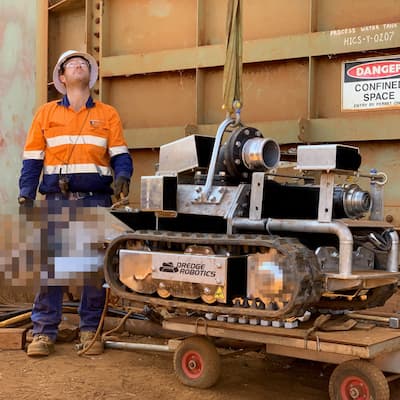
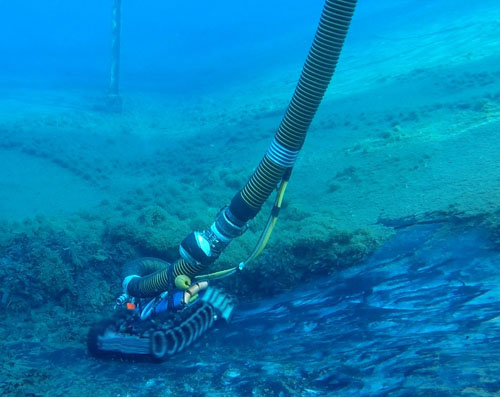
At Dredge Robotics we understand that downtime is costly. That’s why we’ve designed a fleet of globally unique dredging robots that can rapidly and thoroughly clean and inspect your water assets while they remain in full service.
Unmatched Capabilities:
- Dredge diverse environments: Our robots handle lined and non-lined ponds, storage tanks, cooling towers, and more.
- Navigate complex conditions: Advanced sensors ensure efficient cleaning in low or zero visibility and extreme pH levels (1-14).
- Challenging sediment removal: Our robots enable complete cleaning; removing sediment, rags, rocks, and reeds effectively.
- Accredited to work as a direct supplier for all major mining companies in Australia under our triple ISO certified systems; Safety, Enivronmental and Quality.

LINED PONDS
LINED PONDS
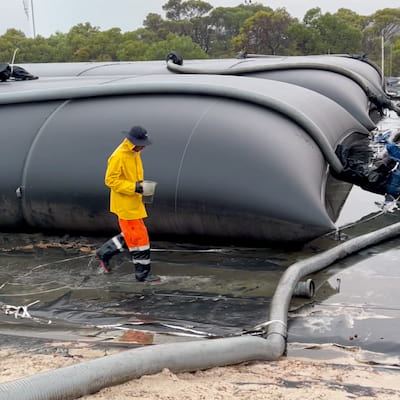
Lined Ponds are a common water storage solution across a wide range of industries, but they present unique maintenance challenges to ensure they are functioning to their designed specifications.
TANKS
TANKS
We provide online robotic solutions to clean process & storage tanks while they remain in service and fully operational.
WASTEWATER DESLUDGING
WASTEWATER DESLUDGING
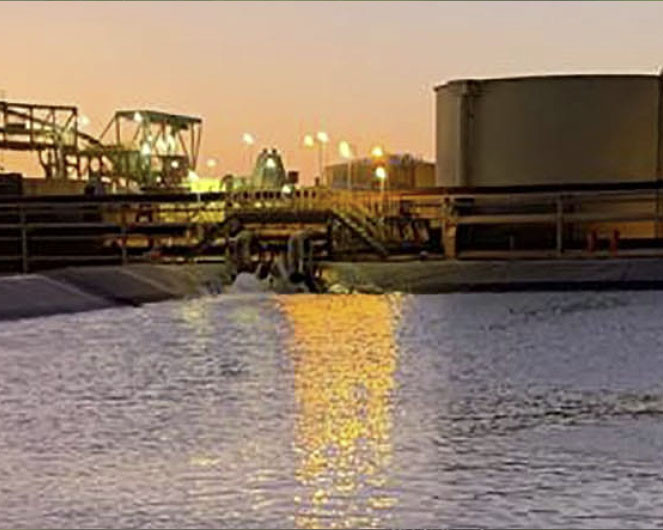
Our online robotic solutions desludge wastewater ponds, raceways, digesters, oxidation ditches and sedimentation tanks with pinpoint GPS tracking while your wastewater assets remain in service.
CHEMICAL PONDS
CHEMICAL PONDS
We provide online robotic solutions to clean chemical ponds and contaminated assets at almost every stage of the treatment process while your facility remains in service.
Capability
Our state-of-the-art robots are designed to clean and maintain various water assets while they remain fully operational. This eliminates costly shutdowns and streamlines your processes, saving you time and money.
Learn More About Our Industry Leading Services
CASE STUDIES
Our online dredging robots repeatedly deliver outstanding results across all projects undertaken across a vast range of industries in Australia.
Innovation
Our team are highly experienced in executing dredging operations and understand the needs of our clients. It is this understanding that has underpinned our robotic fleet development to create genuinely unique products that are capable of achieving things that were previously not possible.
Get in Touch
Find out how you can save time and money with our online robotic dredging solutions.

Frequently Asked Questions
Can you clean lined ponds without damaging my liner?
Yes, our proprietary liner-safe technology has been designed end-to-end to protect the integrity of your pond liner while removing 100% of accumulated sediment. This technology has been extensively proven in a broad range of environments.
Are you accredited to work on minesites for major mining companies?
Yes, we are accredited to work as a direct supplier for all major mining companies in Australia under our triple ISO accredited Environment, Quality, and Health and Safety management systems. We are also accredited to work for many large organisations in other regions globally.
Can you clean process tanks while they remain online?
Yes, Dredge Robotics have a proprietary service offering capable of cleaning process tanks while they remain in full service, removing compacted mud in excess of 6 metres deep with no interruption to service delivery.
RECENT PROJECTS


